Gado-Gado
Gado-gado is often described as a salad, which undersells it. The vegetables are blanched rather than raw, and the warm peanut dressing is thick, savoury and slightly sweet. Eaten with rice cakes or crackers, it is a full meal rather than a side.
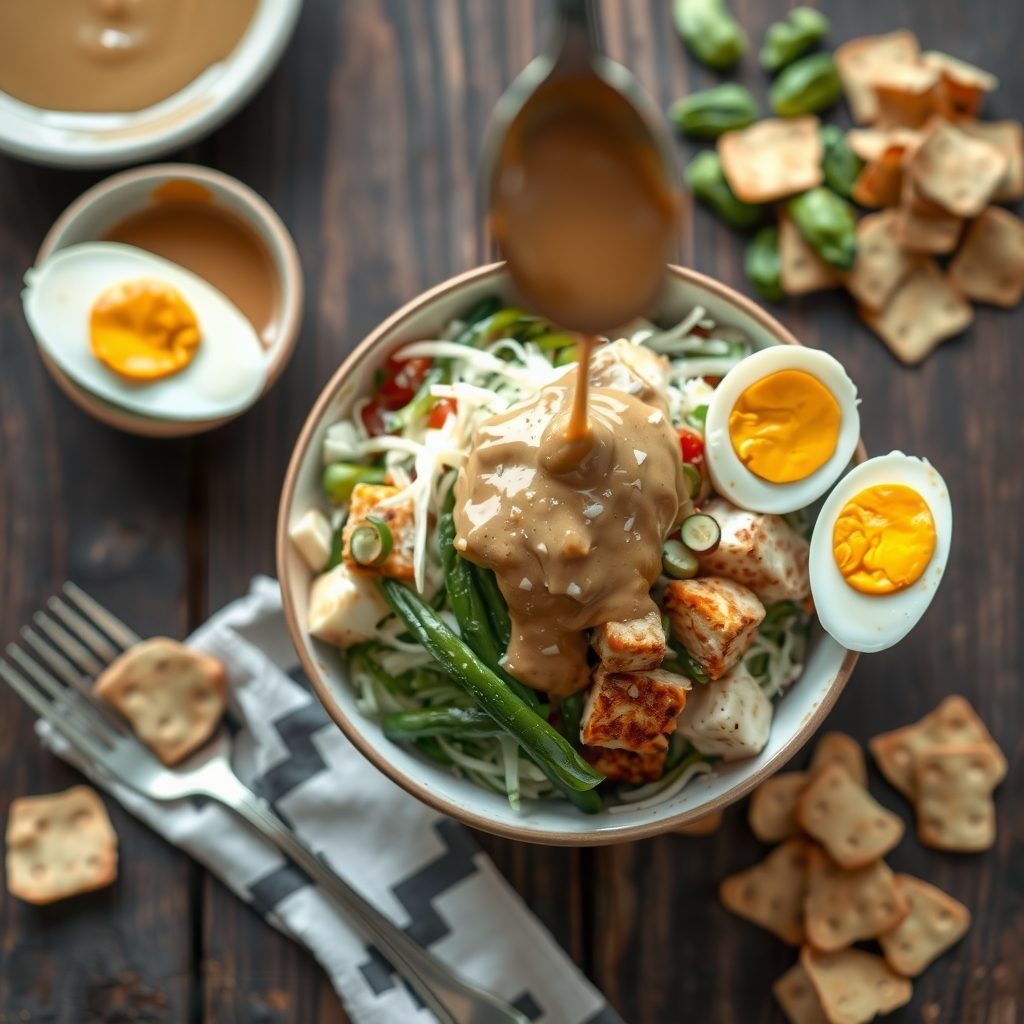
Ingredients
- 250 g green beans, trimmed
- 250 g cabbage, shredded
- 200 g beansprouts
- 2 medium potatoes, boiled and sliced
- 300 g firm tofu, cubed
- 200 g tempeh, sliced
- 3 tablespoons cooking oil
- For the dressing: 250 g roasted peanuts, unsalted
- 4 garlic cloves
- 3 red chillies, deseeded
- 2 tablespoons palm sugar or brown sugar
- 2 tablespoons sweet soy sauce (kecap manis)
- 1 tablespoon tamarind paste
- 200 ml coconut milk or water
- 1 teaspoon salt
- To serve: lontong or rice cakes, prawn crackers, fried shallots
Method
- Blanch the green beans for 2 minutes, the cabbage for 1 minute, and the beansprouts for 30 seconds. Plunge each into cold water immediately to stop the cooking and keep the colour. Drain well and set aside.
- Shallow-fry the tofu and tempeh in the oil over medium heat until golden on all sides, about 4 minutes per side. Drain on paper.
- For the dressing, blend the peanuts, garlic and chillies into a coarse paste, keeping some texture.
- Warm the paste in a pan over low heat with the sugar, sweet soy sauce, tamarind and salt. Add the coconut milk gradually, stirring, until you have a thick but pourable dressing. This takes about 5 minutes. Do not boil it hard or it splits.
- Arrange the blanched vegetables, potato, tofu and tempeh on a platter or in individual bowls.
- Pour the warm dressing over the top, or serve it on the side for dipping.
- Finish with fried shallots and serve with lontong or crackers.
Notes and tips
- Drain the blanched vegetables well. Watery vegetables thin the dressing and the plate turns into soup.
- Keep the dressing warm. Cold peanut dressing becomes stiff and grainy.
- Tempeh benefits from a quick steam before frying if it tastes bitter — 5 minutes over simmering water is enough.
- For a vegan version, the dressing is already plant-based; just check the crackers.
- The dressing keeps three days refrigerated and loosens with warm water when reheated.
Cooked it? Tell us how it went on the contact page — corrections and regional variations are always welcome.
Common mistakes
- Overcooking the vegetables. Gado-gado vegetables should stay bright and a little crisp, not fully soft. Blanch briefly and plunge into cold water to stop the cooking.
- Serving the peanut sauce too thick. Peanut sauce thickens considerably as it cools. Thin it slightly more than looks right while it's still hot on the stove.
- Skipping the sauce's resting time. The sauce needs about ten minutes off the heat for the chilli, palm sugar, and tamarind to settle into balance before you taste and adjust it.
Frequently asked questions
Can gado-gado be made ahead?
The peanut sauce keeps refrigerated for up to a week. Blanch and dress the vegetables just before serving so they don't turn soggy sitting in sauce.
Is gado-gado vegan?
The sauce itself is naturally vegan, built from peanuts, chilli, and palm sugar. Just check the kecap manis and any crackers you serve alongside, since some brands add shrimp paste.
What vegetables can I substitute?
Any mix that holds its texture works. Cabbage, long beans, and bean sprouts are standard; cucumber and boiled potato are common additions.
More Indonesian recipes

Cooking notes: read our Indonesian Pantry Essentials and Kecap Manis Guide.