Klepon
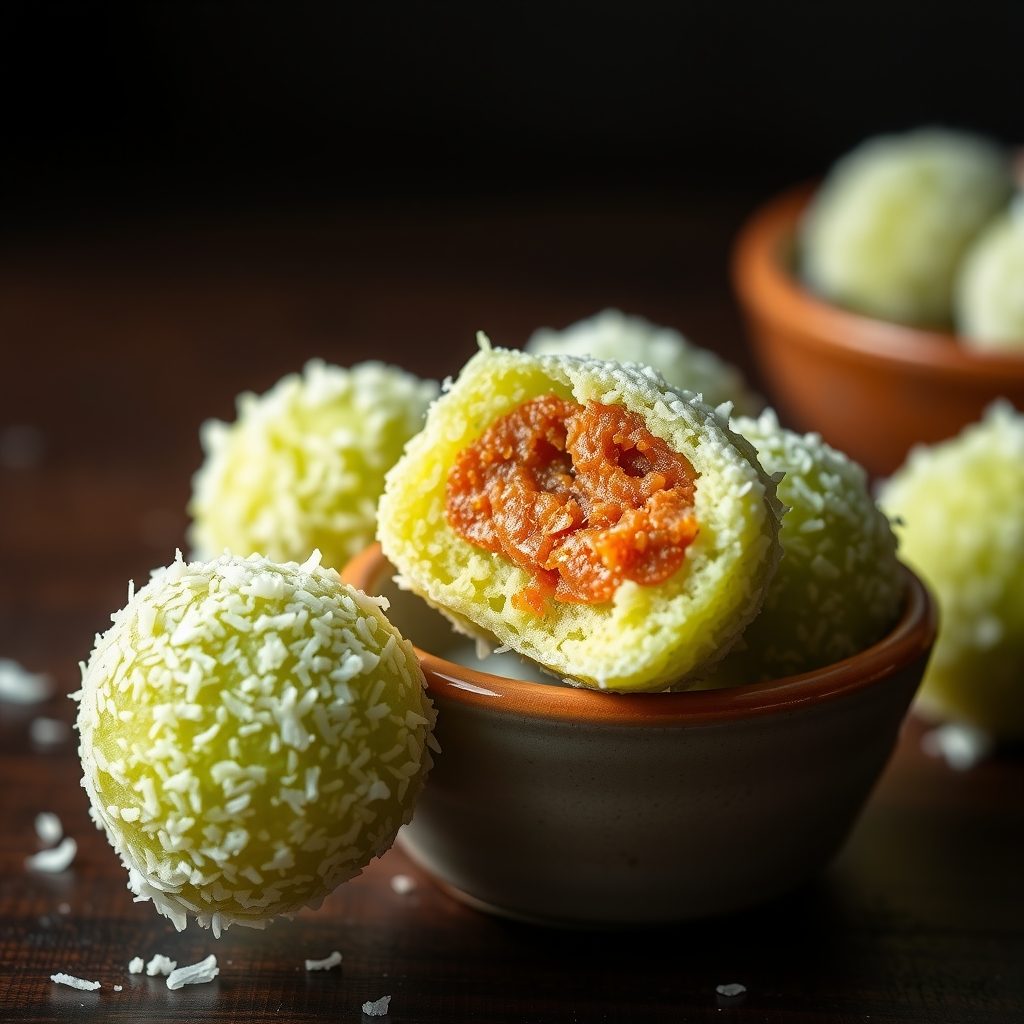
Klepon are small green balls of glutinous rice dough, filled with palm sugar, boiled, then rolled in fresh grated coconut. Bite into one and the palm sugar, which has melted inside, runs out. The green comes from pandan, the chew comes from glutinous rice flour, and the whole thing takes about half an hour from a cold kitchen.
Ingredients
- 250 g glutinous rice flour
- 200 ml warm water
- 1 teaspoon pandan extract, or 3 pandan leaves blended with the water
- 1/4 teaspoon salt
- 150 g palm sugar (gula melaka), chopped into small pieces
- 200 g fresh grated coconut, or desiccated coconut rehydrated
- 1/4 teaspoon salt, for the coconut
- A steamer or a wide pan of water
Method
- If using pandan leaves, blend them with the water and strain, keeping the green liquid. Otherwise stir the extract into the warm water.
- Mix the glutinous rice flour and salt in a bowl, then add the pandan water gradually, mixing with a spoon and then your hands, until you have a smooth, soft dough that does not crack when pressed. If it is too dry add water a teaspoon at a time.
- Steam the grated coconut with the quarter teaspoon of salt for 8 minutes, then set aside to cool. Steaming stops it going sour and makes it cling to the balls.
- Pinch off a piece of dough about the size of a small walnut and flatten it in your palm into a disc.
- Place a few small pieces of palm sugar in the middle, about a quarter of a teaspoon in total. Small pieces melt evenly; one large lump will still be hard when the dough is cooked.
- Bring the edges of the disc together and roll into a smooth ball, sealing completely. Any crack will leak sugar into the water and leave an empty, chewy ball.
- Bring a pan of water to a gentle boil and drop in the balls in batches. They are cooked when they float, which takes about 3 minutes.
- Lift them out with a slotted spoon, roll immediately in the steamed coconut, and eat while still warm. This is the point: cold klepon are a different, much duller snack.
Notes and tips
- Glutinous rice flour is not the same as ordinary rice flour, and neither is the same as wheat flour. The name refers to the sticky quality; it contains no gluten.
- Keep the balls covered as you shape them. The dough dries at the surface and cracks.
- Do not boil hard. A rolling boil breaks the balls open and the palm sugar escapes.
- Palm sugar is much better than brown sugar here, because it has a smoky caramel note that brown sugar lacks.
- Fresh grated coconut is worth seeking out. Desiccated coconut rehydrated in warm water is an acceptable fallback.
Cooked it? Tell us how it went on the contact page — corrections and regional variations are always welcome.
Common mistakes
- Using too little water in the dough. A dry dough cracks while boiling and the palm sugar filling leaks out. Add water gradually until the dough is soft and pliable, not stiff.
- Sealing the dough poorly around the sugar. Any gap in the seam lets the melted sugar escape into the pot. Pinch and roll the seam firmly until it disappears.
- Using desiccated coconut instead of fresh. Dried, packaged coconut doesn't stick to the klepon properly and dries out within an hour. Fresh grated coconut, lightly steamed with salt, is what makes the coating work.
Frequently asked questions
Why did my filling leak out while boiling?
The dough wasn't fully sealed around the palm sugar piece. Pinch and roll the seam until there's no visible gap before dropping it into the water.
Can I use brown sugar instead of palm sugar (gula melaka)?
You can in a pinch, but the flavour is noticeably flatter and less caramel-like. Palm sugar from an Asian grocer is worth sourcing for the real result.
How soon should klepon be eaten after cooking?
The same day, ideally within a few hours. The glutinous rice dough firms up and the coconut coating dries out if left overnight.
More Indonesian recipes
Cooking notes: read our Indonesian Pantry Essentials and Kecap Manis Guide.