Nasi Goreng
Nasi goreng is not rice with things added. It is a specific sequence: aromatics first, then protein, then rice, then seasoning, with each step finishing before the next begins. The wok should be hot the entire time, and the rice should be cold from the fridge.
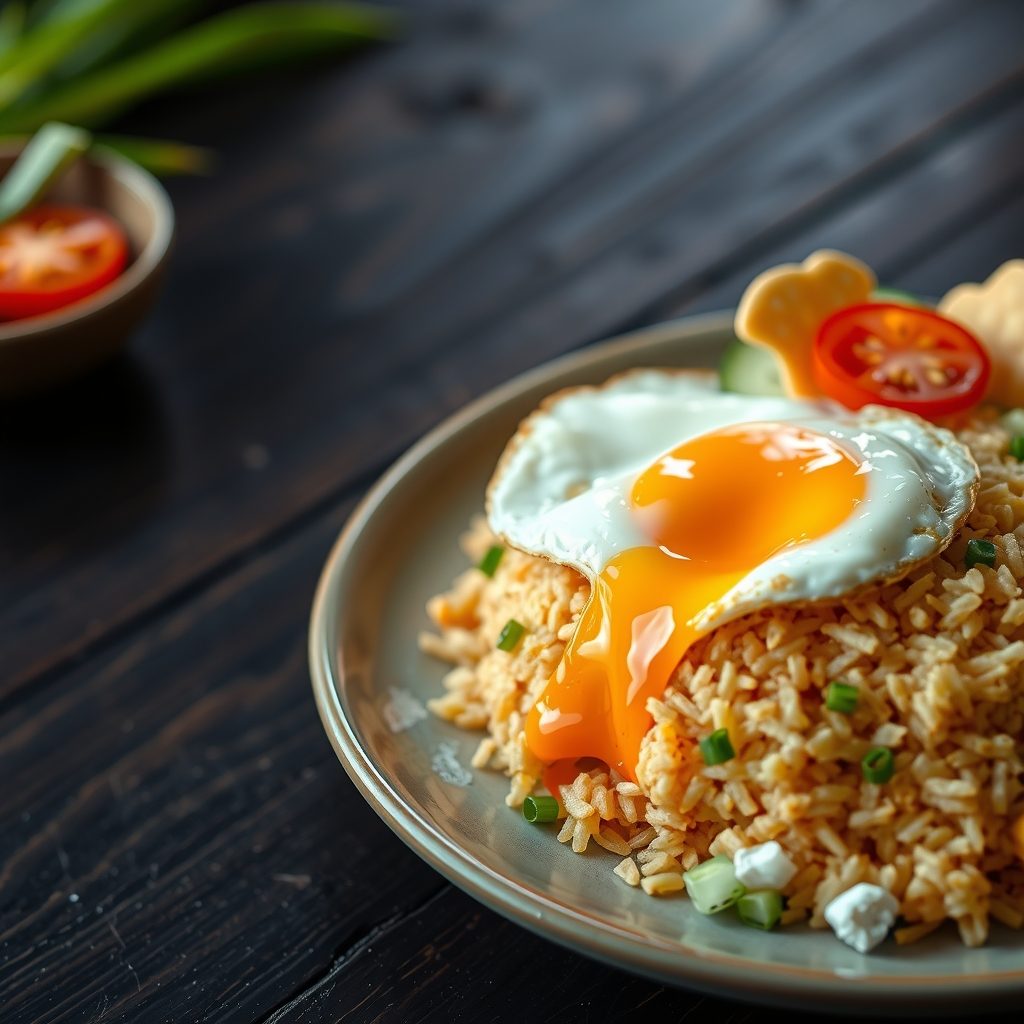
Ingredients
- 600 g cooked white rice, refrigerated overnight
- 3 tablespoons cooking oil
- 5 shallots, thinly sliced
- 4 garlic cloves, chopped
- 1 teaspoon shrimp paste (terasi), or 1 tablespoon fish sauce
- 2 red chillies, sliced
- 250 g chicken thigh, diced small
- 100 g peeled prawns
- 3 eggs
- 2 tablespoons sweet soy sauce (kecap manis)
- 1 tablespoon light soy sauce
- ½ teaspoon white pepper
- 2 spring onions, sliced
- To serve: fried shallots, cucumber, prawn crackers
Method
- Break up the cold rice with wet hands until no clumps remain. Clumped rice steams instead of frying.
- Heat 1 tablespoon of oil in a wok over high heat. Fry the shallots and garlic for 1 minute until fragrant, add the shrimp paste and chillies, and cook 30 seconds more. Push to the side of the wok.
- Add the chicken and stir-fry for 3 to 4 minutes until just cooked, then add the prawns for 1 minute. Remove everything to a plate.
- Add the remaining oil. Crack in the eggs and scramble roughly for 30 seconds.
- Add the rice and toss continuously over high heat for 3 to 4 minutes, breaking up any lumps and coating the grains in the egg and aromatics.
- Return the chicken and prawns. Add the sweet soy sauce, light soy sauce and white pepper. Toss for 2 minutes until the rice is evenly coloured and slightly dry.
- Stir through the spring onions, taste for salt, and serve immediately with fried shallots, cucumber and crackers.
Notes and tips
- Cold, dry, day-old rice is the single most important factor. Fresh rice will always steam and clump.
- Do not crowd the wok. If your wok is small, cook in two batches — overcrowding lowers the temperature and the rice goes soggy.
- Shrimp paste is what makes it taste like nasi goreng rather than generic fried rice. If you dislike it, fish sauce is the nearest substitute.
- Everything must be chopped before the wok is lit. Fried rice cooks in ten minutes and there is no time to prep mid-cook.
- For a vegetarian version, replace the meat and prawns with firm tofu and mushrooms, and use light soy sauce instead of shrimp paste.
Cooked it? Tell us how it went on the contact page — corrections and regional variations are always welcome.
Common mistakes
- Using freshly cooked, warm rice. Warm rice is too wet and clumps into a sticky mass. Cook rice at least a few hours ahead, spread it out, and refrigerate uncovered so the grains dry out and separate.
- Overcrowding the wok. A packed pan steams the rice instead of frying it. Cook in two batches, or use the widest flat pan you have, so the rice actually touches hot metal.
- Adding kecap manis too early. The sugar in sweet soy sauce burns fast over high heat. Stir it in during the last minute, off the hottest part of the heat.
Frequently asked questions
Can I use freshly cooked rice if that's all I have?
You can, but spread it on a tray and refrigerate uncovered for at least an hour first. It will never be as good as truly day-old rice, but it reduces the sogginess.
What can I use instead of terasi (shrimp paste)?
A small dash of fish sauce plus a pinch of extra salt gets reasonably close. It won't have the same fermented depth, but it keeps the dish from tasting flat.
Is nasi goreng always very spicy?
No. The base recipe is mild; all the heat comes from how much bird's eye chilli or sambal you stir in. Start with less and add more at the table.
More Indonesian recipes
Cooking notes: read our Indonesian Pantry Essentials and Kecap Manis Guide.